How to Get a Free Vending Machine for Your Business?
Getting a Free Vending Machine can sound like an easy way to add income, but the word “free” needs careful examination. In many programs, the machine is supplied by a vending operator, distributor, or product company. You may avoid the purchase price, yet still provide electricity, floor space, and regular access for restocking. Some agreements also require a revenue share, minimum sales level, or exclusive product arrangement.
Bob Tullio, a veteran vending consultant and author, has said, “Location is the key to vending success.” That principle should guide every application. A busy factory break room, apartment lobby, clinic, or college office may offer stronger potential than an attractive but quiet storefront. Count daily visitors. Check available power. Measure the doorway and placement area. Small details matter.
The best opportunity usually begins with a clear business case. Prepare a short proposal describing your customer traffic, operating hours, security, and preferred products. Focus on lawful, ordinary items such as bottled water, packaged snacks, coffee, or personal-care products. Ask who owns the machine, who repairs it, and how quickly service calls are handled. Request the full contract before agreeing.
It may not work.
A free machine can still create costs, complaints, or unused space. I would also question optimistic sales projections, especially when they lack local evidence. This guide explains how to compare offers, evaluate locations, negotiate practical terms, and avoid confusing a no-cost installation with a risk-free business decision.
Understand What “Free” Means in Vending Machine Agreements
A “free” vending machine usually means no purchase payment upfront. It rarely means zero cost. The operator may recover equipment expenses through product margins, commissions, or a required contract term. NAMA’s 2023 Convenience Services Industry Census valued the U.S. convenience services industry at approximately $26.6 billion in 2022. That scale shows why operators can offer equipment placement. They earn through repeated transactions, not generosity.
Read every agreement beside the machine. Check the revenue split, payment schedule, product pricing, refill duties, repair response, electricity use, insurance, and removal charges. Some contracts require exclusive service for three to five years. Others include minimum sales targets or automatic renewal clauses. A busy lobby may support the arrangement. A quiet workshop may not. Technavio’s 2024–2028 vending market report projects more than $11 billion in global market growth, but market expansion does not guarantee your location will perform well. Location data matters more than optimistic forecasts.
Ask for a written sales estimate based on foot traffic and operating hours. Request recent performance figures from comparable sites, with confidential details removed. Confirm who owns the machine after termination. “Free” equipment can still occupy valuable floor space and limit your choices. I would also question vague promises about “no maintenance costs.” Someone pays eventually. Sometimes, the contract makes that person you. Expect the agreement to protect the operator first; negotiate the parts that affect your cash flow.
Assess Your Location, Customers, and Product Demand
A free vending machine sounds attractive, but the location must earn its space.
Walk through the site at different hours, including quiet periods. Record foot traffic, waiting time, entrances, lighting, and nearby food options. A machine beside a busy exit may outperform one in a beautiful lobby.
Ask who actually stays there. Employees, students, visitors, and contractors often want different products. Observe what people carry, buy, or complain about. Short conversations can reveal demand that a footfall count misses.
Consider practical details too, such as power access, weather protection, camera coverage, and space for restocking.
A crowded corner may create sales, but it can also block movement and cause complaints.
When contacting vending operators, present clear evidence rather than optimistic guesses. Explain your estimated daily visitors, customer profile, operating hours, and preferred product categories.
Confirm whether “free” means no equipment fee, or includes revenue sharing, minimum sales, maintenance, and contract obligations. Request written terms before accepting installation.
Your first estimate may be wrong. Test demand with a modest product range and review sales weekly. Track slow items honestly, even when they seemed popular during planning.
A healthy arrangement should also define restocking frequency, repair response times, hygiene standards, removal conditions, and responsibility for electricity. Do not promise exclusive access until the location owner approves it.
Find and Compare Vending Machine Placement Programs
A “free” vending machine usually means no upfront equipment payment. The placement company often owns, installs, stocks, and maintains the machine. In return, your business may provide floor space, electricity, and customer access.
Compare placement programs by reading the agreement carefully. Check the commission rate, payment schedule, maintenance response time, and product selection process. Ask who handles refunds and damage. Confirm whether you can reject products that conflict with your customers’ needs. Also review the contract length, renewal terms, removal process, and any exclusivity clause. Read every line.
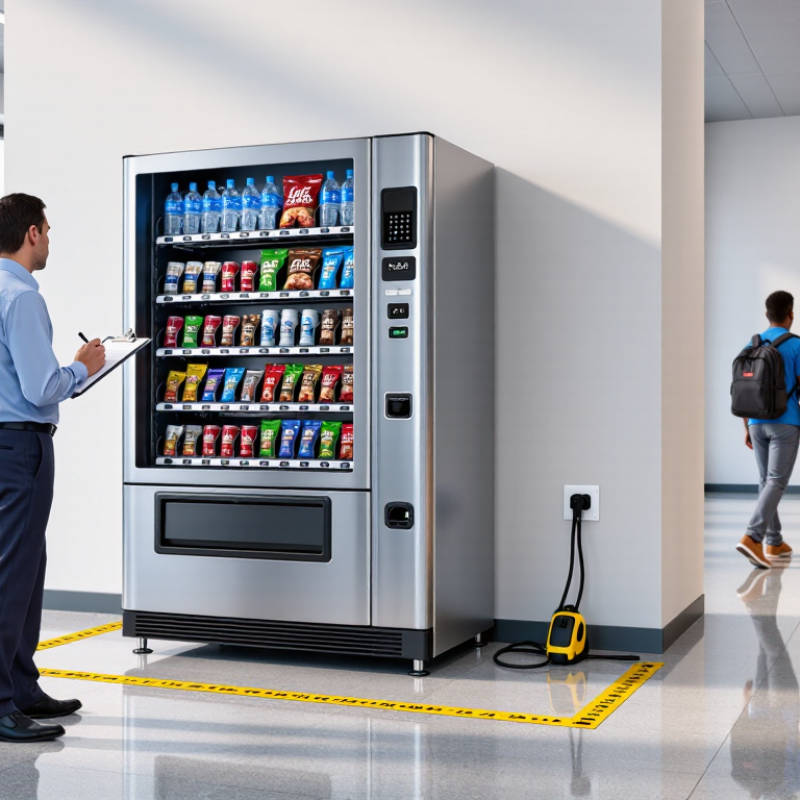
A useful comparison starts with the machine’s proposed location. Measure the available space near an outlet, but avoid blocking entrances, aisles, or emergency routes. Watch customer traffic for several days. A machine beside a busy break room may perform better than one hidden near a reception desk. Ask the operator for realistic sales estimates based on similar sites, not optimistic promises. Ask for proof.
My first comparison mistake would be focusing only on the commission. A higher percentage can still produce less value if the machine stays empty or repairs take weeks. Request references from comparable businesses, then contact them directly. Confirm insurance coverage and local permit responsibilities in writing. Details matter. Some agreements look simple until a slow month exposes the weak points. A short trial period may reduce risk, though not every operator offers one. Review the terms with a qualified adviser before signing.
Typical Host Revenue Share by Vending Machine Placement Program
Revenue-share terms vary by foot traffic, product mix, machine type, and service responsibilities. The ranges below represent common industry benchmarks for businesses comparing vending placement options.
How to read this chart: A higher host revenue share may reduce the operator’s margin but can make a location more attractive to the business providing space and customer access. Fully managed placements typically require little or no upfront investment from the host.
Prepare Your Business and Submit an Application
A strong free vending machine application begins with a prepared location, not a hopeful email. Gather photos of the proposed area, weekly visitor estimates, operating hours, power access, and nearby food options. A clean lobby beside a break room is more persuasive than a vague promise of “high traffic.” The 2023 Global Vending Machine Market report valued the worldwide market at more than $50 billion, showing serious demand, but providers still assess each site carefully. Their decision depends on expected sales, security, accessibility, and service costs.
Prepare a short business profile with registration details, insurance information, and a simple product plan. Explain who will use the machine and how often. Include a basic floor sketch with measurements. Ask about installation fees, stocking schedules, revenue sharing, repair responsibilities, minimum contract periods, and removal terms. “Free” may only mean no upfront equipment charge. Read every condition. A 2022 industry census reported billions in annual vending sales in the United States, yet poor placement can still produce weak results. I once assumed foot traffic guaranteed sales. It did not. Check the location at different hours, speak with employees, and record actual movement for several days. A realistic application is more credible than inflated numbers. Keep the first proposal simple, accurate, and easy to verify.