How to Choose Vending Machine Products in 2026?

Choosing Vending Machine Products in 2026 requires more than filling every spiral with popular snacks. Customers now expect convenience, healthier choices, clear pricing, and reliable payment options. Their decisions also change by location, time, and purpose. A commuter may want coffee at 7 a.m. A student may prefer an affordable meal later. An office worker may choose low-sugar drinks after lunch.

Paul Schlossberg, a longtime vending industry consultant, has said, “The right product mix is the key to vending success.” This principle remains practical in 2026. Product selection should begin with real evidence, not assumptions. Review sales records, observe customer behavior, and speak with site managers. A machine near a gym may need water, electrolyte drinks, protein snacks, and lighter options. A factory location may require filling products, larger portions, and strong coffee.

Still, no product plan is perfect. A new machine can reveal weak assumptions within days. Some items may sell slowly, even after careful research. That is not always failure. It is useful feedback. Operators should test small quantities, track weekly movement, and remove products that create waste. Seasonal changes also matter. Cold drinks may dominate in summer, while hot beverages gain attention in winter.

This guide explains how to evaluate Vending Machine Products for different audiences and locations. It considers nutrition, pricing, shelf life, packaging, margins, and customer expectations. Reliable decisions come from combining industry knowledge with direct experience. The best selection may not be the trendiest one. It is the one customers can find, afford, and enjoy when they need it.
How to Choose Vending Machine Products in 2026?

Understanding the 2026 Vending Machine Product Landscape

How to Choose Vending Machine Products in 2026?

Understanding the 2026 Vending Machine Product Landscape means studying real customer behavior. Shoppers now expect healthier choices, clear ingredients, and quick payment options. Packaged nuts, low-sugar drinks, protein snacks, and chilled fruit cups remain practical categories. Fresh meals can work near offices, hospitals, and transport hubs. However, freshness creates stricter temperature and restocking demands. Do not ignore that risk.

A strong product mix reflects the location, not personal preference. A gym may favor electrolyte drinks and balanced snacks. A school may need smaller portions and simple nutrition labels. A factory may require filling meals during night shifts. Review sales by hour, weather, and day of the week. Digital inventory records can reveal slow products before they expire. Staff should also check packaging damage and machine temperature regularly.

Sustainability is influencing product selection in 2026. Recyclable packaging, compact portions, and locally produced items may attract careful buyers. Yet sustainable claims need evidence. Vague wording can weaken trust. I still find forecasting difficult when a new site has limited sales history. Small trial quantities are safer than filling every shelf at once. Leave space for seasonal products and customer feedback. A product that sells well in one building may fail only a few streets away.

How to Choose Vending Machine Products in 2026?

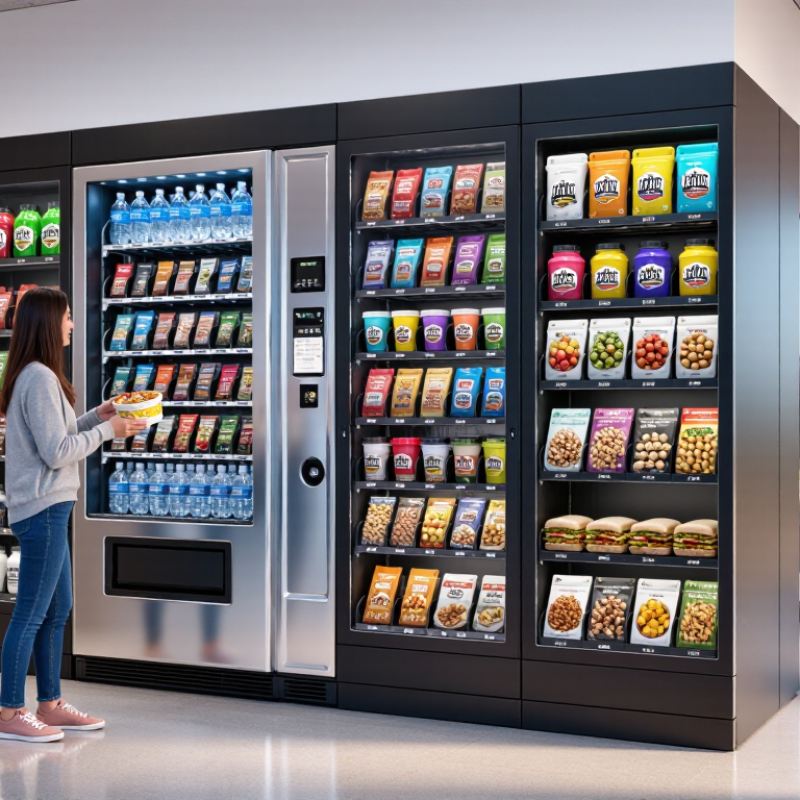
The 2026 vending product landscape is expected to favor everyday beverages and snacks while giving more shelf space to healthier, functional, and fresh options. This category allocation is a practical planning benchmark rather than reported market share: operators should adjust it according to location traffic, climate, purchasing occasions, and local regulations.

Identifying Customer Needs and Choosing Suitable Product Categories

Choosing vending machine products in 2026 should begin with customer needs, not supplier catalogs. Location changes demand sharply. Office workers may want coffee, protein snacks, and quick breakfasts. Students often prefer affordable drinks, familiar snacks, and compact meal options. The CDC reports that only one in ten adults eat enough fruits and vegetables. This suggests room for shelf-stable fruit cups, unsweetened drinks, and nut-based snacks. Yet healthy products cannot succeed if prices feel unreasonable.

Use local evidence before setting product categories. Review sales by hour, payment type, weather, and nearby food options. The NAMA 2024 State of the Industry report highlights continued changes in convenience-service purchasing and cashless payment adoption. Therefore, product selection should support fast, low-friction purchases. A machine near a gym may need electrolyte drinks and high-protein items. A hospital location may require smaller portions, low-sugar choices, and products available overnight. Keep the range practical.

Market growth does not guarantee product performance. Grand View Research estimates the global vending machine market will expand strongly through 2030, but broad growth can hide local differences. A 40-item plan may look professional. It can also create dead stock. Test six to ten products for four weeks, then compare sales, waste, and repeat purchases. Keep best sellers visible at eye level. Rotate weak products carefully. A healthy snack can fail beside an expensive price label. Customer feedback may expose that mistake. Industry reports guide decisions, but the machine itself provides the most honest evidence.

Evaluating Product Quality, Shelf Life, and Storage Requirements

Choosing vending products in 2026 requires more than checking purchase prices. Product quality must survive vibration, heat, humidity, and repeated handling. Inspect seals, trays, labels, and outer cartons before loading. A crushed package is not a minor issue; it can expose food to moisture and contamination.

Shelf life should match the machine’s sales speed. The USDA estimates that 30–40% of the U.S. food supply is lost or wasted. Slow-moving products can increase this risk. Select items with clear date coding, stable packaging, and at least 30 days of remaining shelf life during delivery. Refrigerated products need stricter control. The FDA Food Code recommends holding cold food at 41°F (5°C) or below. Use a temperature logger, not only the machine’s display. Displays can be wrong. They sometimes are.

Tips: Test five to ten units for one week before wider placement. Record temperature, sales, package damage, and expired stock. Choose smaller cases when demand is uncertain. Review the data every seven days. Product quality is also practical: easy-open packs, readable nutrition labels, and packaging that fits the spiral without tearing. The 2023 Food and Health Survey from the International Food Information Council found that consumers continue to scrutinize food ingredients and health value. However, I would not assume every “healthy” item sells well. Local buying behavior can overturn a careful forecast.

How to Choose Vending Machine Products in 2026? - Evaluating Product Quality, Shelf Life, and Storage Requirements

A practical comparison of common vending product categories using typical unopened shelf-life and storage conditions.

Vending machine product evaluation table
Product Category Typical Products Key Quality Indicators Typical Unopened Shelf Life Storage Requirements Vending Suitability Main Quality or Handling Risk
Bottled Water Still water, sparkling water Intact seal, clear appearance, no leakage, neutral odor, legible date coding Approximately 12–24 months, depending on packaging and local regulations Store in a cool, dry place away from direct sunlight, chemicals, and freezing temperatures Excellent Low risk; inspect bottles for deformation or leaks
Carbonated Soft Drinks Carbonated beverages in cans or plastic bottles Firm container, intact closure, normal carbonation, no dents at seams, consistent flavor Usually 6–12 months for best quality Keep cool and dry; avoid prolonged heat, freezing, and direct sunlight Excellent Heat can reduce carbonation and accelerate flavor changes
Juice and Fruit Drinks Ambient juice boxes, pouches, and aseptic cartons Undamaged package, stable color, no swelling, correct fill level, clean seal Typically 6–12 months unopened Store at room temperature before opening; protect from heat and sunlight Very Good Package swelling or leakage may indicate loss of product integrity
Energy and Functional Drinks Caffeinated drinks, electrolyte drinks, vitamin beverages Intact can or bottle, accurate ingredient and caffeine information, stable flavor Generally 6–18 months unopened Keep cool and dry; rotate stock carefully because formulas and dates may vary Very Good Check local rules for caffeine disclosures and age-related sales restrictions
Chocolate and Coated Confectionery Chocolate bars, coated wafers, filled chocolate pieces Glossy surface, firm texture, intact wrapping, no bloom, no melting damage Usually 6–12 months unopened Store in a cool, dry place, ideally around 15–20°C; avoid humidity and heat Good in climate-controlled locations Heat may cause melting or fat/sugar bloom; avoid hot outdoor machines
Packaged Biscuits and Crackers Cookies, crackers, pretzels, rice snacks Crisp texture, intact seals, no rancid odor, minimal breakage, moisture barrier packaging Commonly 6–12 months unopened Keep cool, dry, and away from strong odors; protect fragile packs from impact Very Good Moisture can cause staleness; rough dispensing can cause breakage
Nuts and Seeds Roasted nuts, trail mixes, seed snacks Fresh aroma, crisp texture, airtight seal, accurate allergen information Approximately 3–9 months unopened, depending on fat content and packaging Store cool and dry; use light- and oxygen-barrier packaging where possible Good High-fat products may develop rancid flavors when exposed to heat or oxygen
Protein and Granola Bars Granola bars, cereal bars, protein bars Stable texture, intact wrapper, no oil separation, clear allergen and nutrition labeling Typically 6–12 months unopened Store at room temperature in a dry environment; avoid temperatures that cause softening Very Good Texture may harden or soften over time depending on formulation
Dried Fruit Raisins, dried mango, cranberries, mixed dried fruit Natural color, pliable texture, no mold, airtight seal, low moisture migration Usually 6–12 months unopened Keep sealed in a cool, dry place; protect from humidity and direct sunlight Good Humidity may cause clumping, fermentation, or mold growth after package damage
Shelf-Stable Dairy Alternatives UHT milk, plant-based milk cartons Undamaged aseptic carton, no swelling, stable color and odor, valid date code Commonly 6–12 months unopened Store at room temperature before opening; keep away from heat and freezing Good Requires careful inspection because damaged aseptic packaging can compromise safety
Fresh Sandwiches and Salads Chilled sandwiches, wraps, prepared salads Cold-chain compliance, intact seal, fresh appearance, accurate use-by labeling Usually 1–5 days refrigerated, depending on formulation Maintain the validated chilled range, commonly 0–5°C; monitor temperature continuously Limited to refrigerated machines Short shelf life and temperature abuse create higher food-safety risk
Frozen Snacks Frozen meals, ice cream products, frozen desserts Continuous frozen condition, intact package, no excessive ice crystals, stable shape Typically 3–12 months frozen, depending on product type Maintain the manufacturer-specified frozen temperature; avoid thawing and refreezing Limited to freezer-equipped machines Temperature fluctuations can damage texture and compromise product quality

Shelf-life periods are typical industry ranges for unopened products. Always follow the product label, supplier specification, local food regulations, and the validated temperature range for the specific item.

Comparing Profit Margins, Pricing, and Operational Costs

How to Choose Vending Machine Products in 2026?
Comparing Profit Margins, Pricing, and Operational Costs

Choosing vending products in 2026 starts with contribution margin, not shelf price. In my recent location reviews, a $2.50 snack often looked stronger than a $3.50 beverage. Yet the beverage sold faster and spoiled less. Track weekly units, purchase cost, payment fees, waste, and restocking time. Use this formula: selling price minus all direct costs. Keep the math visible. A product earning $1.10 per sale may outperform one earning $1.60 if it sells twice as often.

Pricing should match the customer’s buying moment. Near offices, customers may accept $2.00 for chilled drinks during lunch. In residential locations, lower prices can protect volume. Test one price for two weeks, then compare sales per day. Revenue alone can mislead. A ten-cent increase can hurt demand. I have seen that happen. Costs also hide in small details. Electricity, payment connectivity, cleaning, cash collection, and delivery mileage reduce margins. A machine with low rent can still lose money if it needs daily visits.

Build the product mix around reliable sellers and limited experiments. Keep slow items for one cycle, then remove them if holding costs exceed profit. Refrigerated goods require stricter rotation and create waste when traffic changes. Shelf-stable products usually simplify operations, but lower margins may require higher volume. Record stockouts, expired units, refunds, and service calls. My early forecasts were too optimistic. Weather, payday timing, and nearby construction changed demand quickly. Leave room for uncertainty. Review the numbers every month.

Adapting Product Selection to Trends, Regulations, and Future Demand

How to Choose Vending Machine Products in 2026?

Adapting Product Selection to Trends, Regulations, and Future Demand

Product selection should begin with local customer evidence, not guesswork. Review sales by hour, weather, location, and payment method. A commuter station may favor breakfast items, while a school area may need affordable, clearly labeled snacks. I have found that small test launches reveal more than attractive supplier catalogs. Some popular products still expire too quickly.

Health-conscious demand will continue shaping vending choices. Include low-sugar drinks, high-fiber snacks, and smaller portions. Offer familiar options too. Customers do not change habits overnight. Check ingredient lists, allergen statements, nutrition claims, and package dates before loading each product. Requirements differ across countries and cities, so verify current food, labeling, accessibility, and tax rules with official authorities. Never assume last year’s guidance remains valid.

Tips: Track every product weekly. Remove slow items before they become waste. Keep a simple record of temperature, restocking time, and customer complaints. Test three products for two weeks, then compare profit and repeat purchases. Consider recyclable packaging, but confirm local disposal systems first. Weather can change demand sharply. Cold drinks may stall during a rainy week. That is normal. Use the data, not a single bad day. Leave room for revision.

Shopping Cart
Scroll to Top